Happiness in Education
I have a question...
~
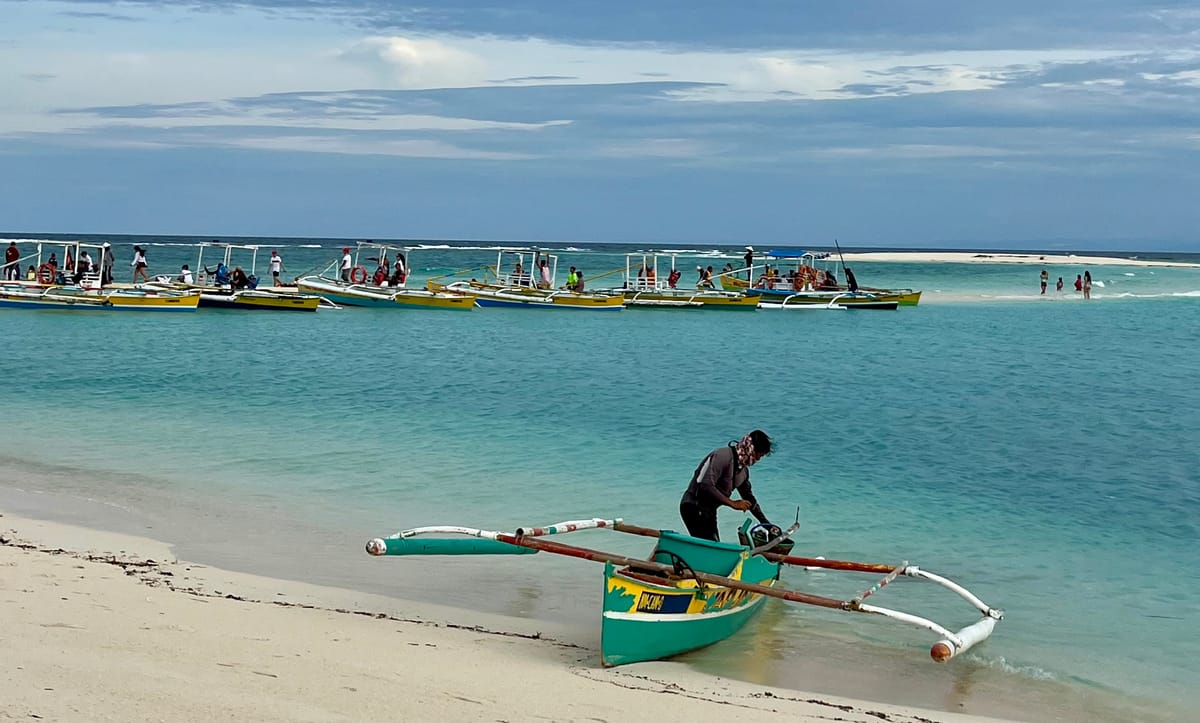
To lay a little bit of context, I have recently fallen into some property on a small island in the Philippines. During my recent trip there, I visited the plot and began brainstorming what I wanted to do with the space.
The island is small, roughly 60 km (~40 mi) in circumference and an active volcano at its center. Communities are scattered along the island's edges, with tiny schools and children playing in the streets. Although the area is underdeveloped, the people seem genuinely happy, their faces bright with smiles and their laughter echoing down the roads.
As I contemplated what to do with the title, I began leaning towards a community-focused project. I immediately thought about building a proper school that would introduce modern technology and progressive subjects. My goal would be to simply expose children in the community to topics they wouldn't otherwise encounter.
While on the ferry back to Butuan, I discussed my idea with my mom. I explained how impactful I believed it could be for the locals, aiming to introduce modern education while respecting their values and traditions. I emphasized how it could give them new perspective, improve quality of life and overall happiness. Then, my mom asked me a question that has been on my mind ever since.
~
...Do people need more education if they are already happy?
She then followed this with "If we got a flat tire on the side of the island, we would likely die. If a local got a flat tire, they would be moving again in under an hour. So what makes you think that your education is more valuable than theirs?"
This stumped me. Stumped me so much I am still grappling with it more than a month later. I realized my original perspective was ignorant and narrow on many levels. I grew up with privilege, thanks to my parents, who were first-generation Americans who studied and worked tirelessly to provide more opportunities for me and my sister. My view of education was shaped by this background: I believed that if you weren't learning how brain cells communicate, or building a program to land you a job with a FAANG company, then weren't truly educated. But, I have come to understand this is simply false. I have come to the realization that the education you need is the education that is relevant to you. The only education you need, is the education that leads to your happiness.
For the locals on the island, delving into chemical structures of the body or analyzing the history of the world isn't necessary. Instead, they learn how to tie the best fishing knot, how to rebuild their house after a hurricane, how to find drinkable water and a steady food source–things I wouldn't even know how to begin. Though most importantly, they posses knowledge that ensures their happiness and keeps a smile on their faces. If this isn't what is important in life, then I don't know what is.
As we returned to Manilla, I was once again hit by the stark economic divide in the city. It felt as if you were either in the top 1% of income, or the bottom 99%. Seeing this whenever I visit, always makes me believe education is needed, challenging the argument of my mom. According to the Philippine Statistics Authority (PSA), 25% of Filipinos between the age of 5 and 25 are uneducated or out-of-school. Yet somehow, we rank 52nd globally in happiness, based on the World Happiness Report. That is the highest out of all Southeast Asian countries and interestingly enough, higher than the United States.
This came as a slap to my face, so I did more research. A report by The National Library of Medicine concluded that the effect of college education correlates to a 0.165 point increase in happiness on average. Though the report indirectly pulled back the claim by explaining the marginality of the number due to a few reasons. They noted because of their use of a single-item happiness index, the numbers fail to realistically model the complexity around the idea of happiness. They pointed out that the main positive influence of higher education was improved personal social status and family status, which then blur the meaning of their data more.
So I guess I was wrong? The more research I do, the more grey everything becomes and the farther an answer feels from reach.
But, after thinking about the question for a while now, I would say my thoughts side with personal need. Higher education in particular isn't needed everywhere. While I still believe that some form of education is required, in the end, you only need to find the right balance of knowledge that helps you create a fulfilling and happy life.
I hope you ponder the question yourself, as I learned a lot from doing so.
Talk to you soon!
~ Cyrus Foroudian